
Gut Healthy Korean Multigrain Rice – Japgokbap (잡곡밥)
Hi-fiber.
Hi-protein.
DELICIOUS.
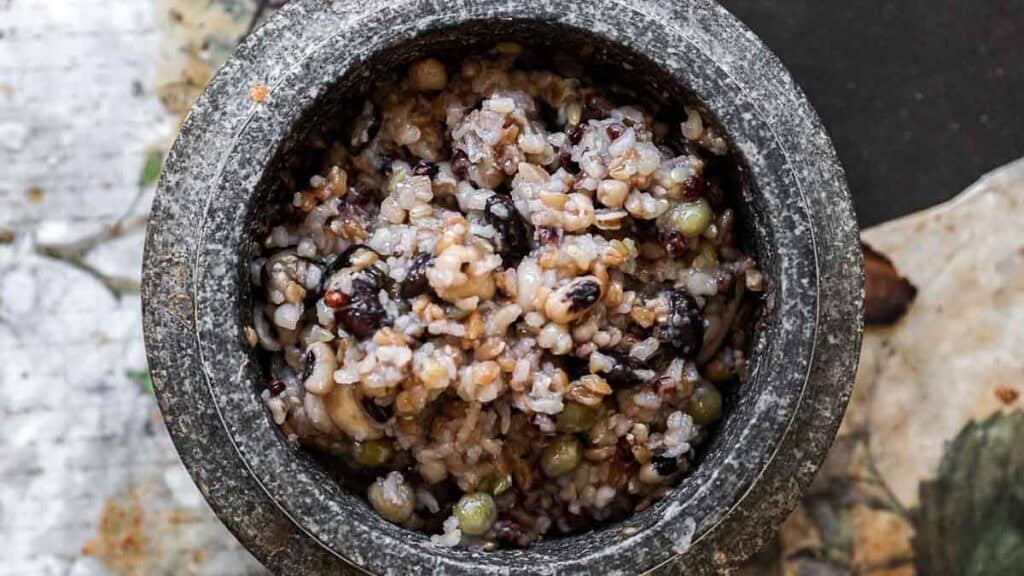
My mother has been making this hi-fiber, hi-protein Korean multigrain rice for basically my whole life. We almost never eat plain white rice or brown rice at her home. Even my own rice blend at home is a mix of brown rice, sweet brown rice, and pearled barley. But, I figured it was high time I amp up my multigrain rice game and this incredibly healthy and absolutely delicious Korean multigrain rice or japgokbap is the result! This is the perfect way to start any traditional Korean meal, packed with banchan or Korean side dishes. But it’s also GREAT for your favorite rice bowl or a fiber friendly side dish itself.
Let’s get into it!
Disclaimer: Some of the links in this post may be affiliate links for products I use and love. If you make a purchase after clicking one of those links, I may earn a small affiliate commission, perhaps enough to buy some extra gochujang or gochugaru 🙂
White Rice Was Once a Status Symbol in Korea.

Did you know that white rice used to be a status symbol in Korea? Because white rice is often harder to grow (particularly in the northern region of the peninsula), throughout its history, white rice was often seen as reserved for the wealthy. And thus, even today, some view anything other than pure white rice as associated with poverty. Which is so ass-backwards because white rice is like the least nutrient dense grain of all time.
But geography is still geography, and it was easier to grow things like millet, barley, and sorghum. So, in order to stretch a bowl of “rice,” multigrain rice was used to maximize caloric density. There were even periods in Korea’s recent history–in the 1960s and 70s, right after the Korean War–when the government mandated mixed grain rice to combat food shortages (e.g., restaurants were required by law to serve rice mixed with at least 25% other grains).
What is Korean multigrain rice or japgokbap? Well, japgok (잡곡) literally translates into “mixed grain” and bap (밥) means “cooked rice.” Thus japgokbap literally means cooked rice mixed with grains. However, japgokbap, these days, doesn’t just incorporate barley, millet, and sorghum. My mother’s Korean multigrain rice, for example, also incorporates legumes! Specifically, Omma loves to include chickpeas or soybeans or black-eyed peas in her Korean multigrain rice! Which not only increases the fiber content, but the protein content!
Health Benefits of Korean Multigrain Rice.
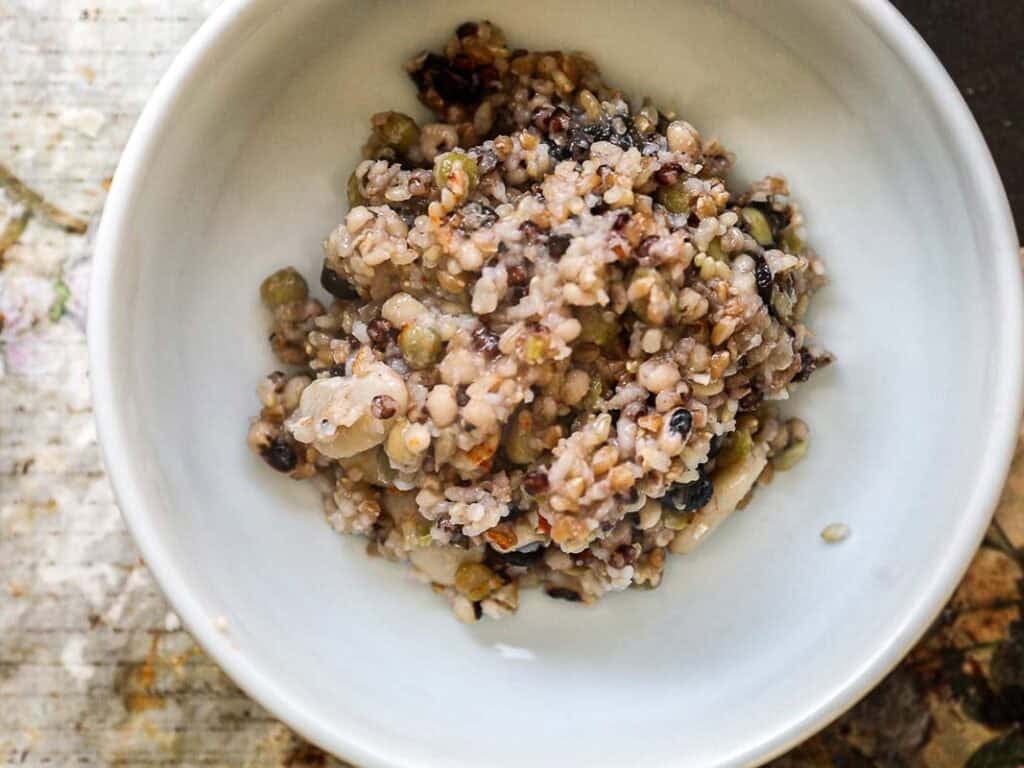
There are so many health benefits to a bowl of Korean multigrain rice so buckle up, because I’m going to discuss a lot of them!
Blood Sugar & Metabolic Health.
Unlike white rice, Korean multigrain rice dramatically lowers the glycemic index compound because the fiber and resistant starch slow digestion. This, in turn, prevents blood sugar spikes. Korean multigrain rice is thus often recommended for those who are managing their blood sugar (like those with type 2 diabetes). Barley, in particular (and which I love) contains beta-glucan, the same soluble fiber contained in oatmeal, for which there exists strong clinical evidence for improving insulin sensitivity.
Gut Health.
With all this fiber, it should come as no surprise that Korean multigrain rice offers a massive boost to your gut health. The insoluble fiber from the barley, brown rice, and sorghum feeds into your good gut bacteria and promotes regularity (if you get my drift). The legumes, too, add a ton of fiber to cultivate a healthy microbiome.
Heart Health.
With heart disease being the #1 killer on the planet, anything that promotes heart health should be on everyone’s radar. Korean multigrain rice has been linked to reduced LDL cholesterol thanks to, again, the fiber.
Bone & Muscle Health.
The women in my family have all been plagued with osteoporosis. And, as I start to enter the ominous halls of perimenopause, bone health is growing to be a priority in my nutrition. It turns out that many of the ingredients in Korean multigrain rice can help with that. For example, farro is a great source of magnesium, which supports bone health. The amino acids contained in the grains and legumes will also, obviously, promote muscle health (which will support those bones!).
Lots of Micronutrients.
Unlike a bowl of just white rice (i.e., what was once the stuff of luxury), Korean multigrain rice contains a ton of micronutrients:
- B vitamins (B1, B2, B3, B6): which are critical for energy metabolism and nervous system functions.
- Iron: which is also good for energy metabolism, as well as immune system functioning.
- Zinc: which promotes healthy immune function and wound healing.
- Magnesium: which supports hundreds of enzymatic functions in the body.
- Manganese: which supports bone formation and antioxidant enzyme activation.
KEY INGREDIENTS AND NOTES ON SUBSTITUTIONs For Korean Multigrain Rice.
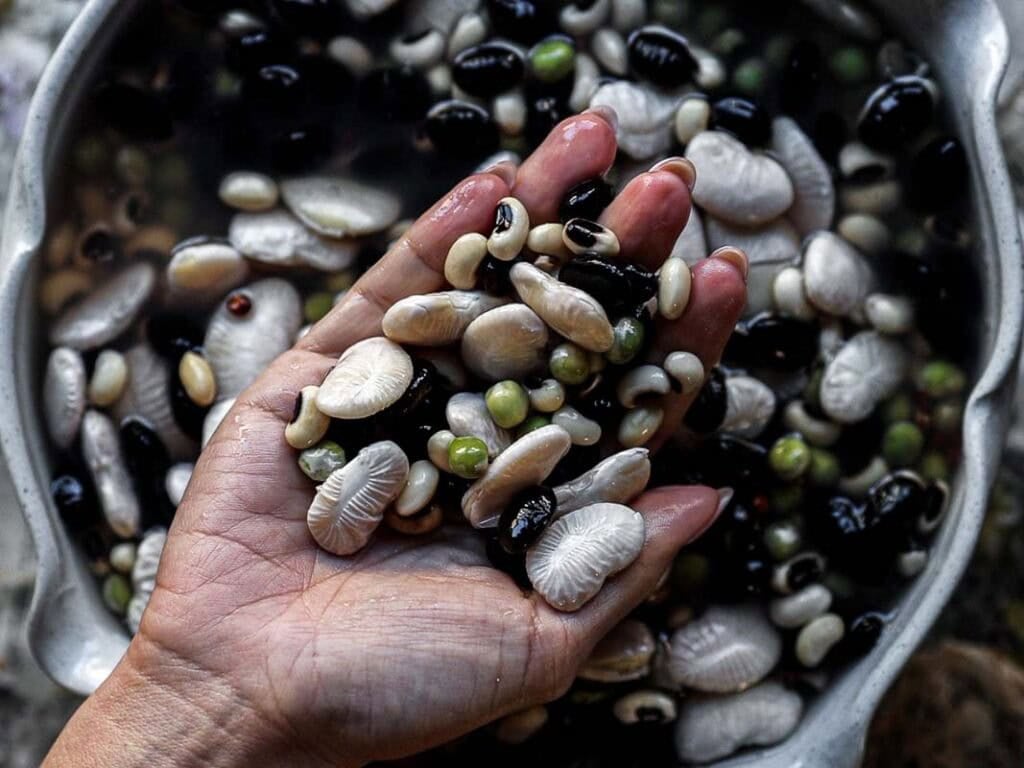
The following are the key ingredients as well as substitution recommendations for this Korean multigrain rice recipe:
- Green peas
- Lima beans
- Black soybeans
- Black eyed peas
- Sorghum
- Sweet brown rice
- Brown rice
- Farro
- Pearled barley
Are these ingredients cooked or dry?
All of these ingredients are dry and uncooked. You cannot mix uncooked rice with cooked beans or vice versa. The idea is for all of these to cook together.
Can I substitute something for the brown rice?
There are two ingredients that I would not leave out or substitute: short grain brown rice and sweet (aka, glutinous) brown rice. Generally speaking, Korean multigrain rice has a base of both rice (ssahl or 쌀) and glutinous sweet rice (chapssahl or 찹쌀). I also would not substitute white rice for either of these–not only will you have less nutritional bang for your buck, the rice will grow mushy while the other ingredients in your Korean multigrain rice are perfectly cooked.
What about the other ingredients? Can I substitute for those?
For the remainder of the ingredients, you can substitute your favorite grains and your favorite legumes. For example, sub in dried chickpeas for the black eyed peas or soybeans. Use dried kidney beans or pinto beans in lieu of lima beans. These particular legumes are just the ones my mother happens to favor. Similarly, you can swap in different grains: use millet instead of farro. You can also add a little black rice to give your Korean multigrain rice a gorgeous purple color.
Wait, isn’t farro like a Mediterranean grain?
Why yes, yes it is, and you’d be hard-pressed to find farro in a traditional rendition of Korean multigrain rice. But as I said above, you can swap in your favorite grains and legumes for this recipe. I like farro because it’s (a) easier to find here in the States, (b) it has a TON of fiber, and (c) it’s high in protein.
equipment you’ll need for This Multigrain Korean Rice.
This recipe for Korean multigrain rice is best when cooked in a rice cooker. If you don’t have a rice cooker, you can also use a pressure cooker or Instant Pot. If you have neither of these, you can cook this Korean multigrain rice blend in a regular Dutch oven or dolsot, but the legumes will be chewy and not nearly as soft. I tried it both ways, and I definitely prefer using a rice cooker. My parents bought me this Cuckoo rice cooker for Christmas last year and I love it! But there are a lot of cheaper ones for people who don’t make rice everyday. 🙂
Step-by-Step Instructions to Making Korean Multigrain Rice.
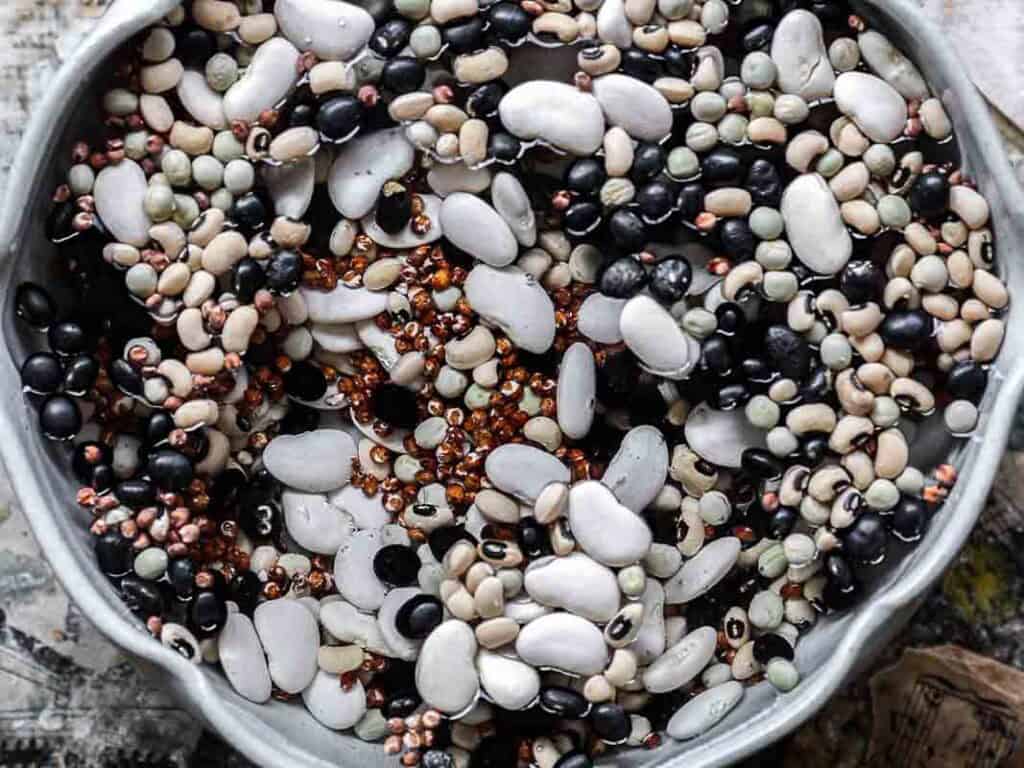
Step 1: Soak your beans.
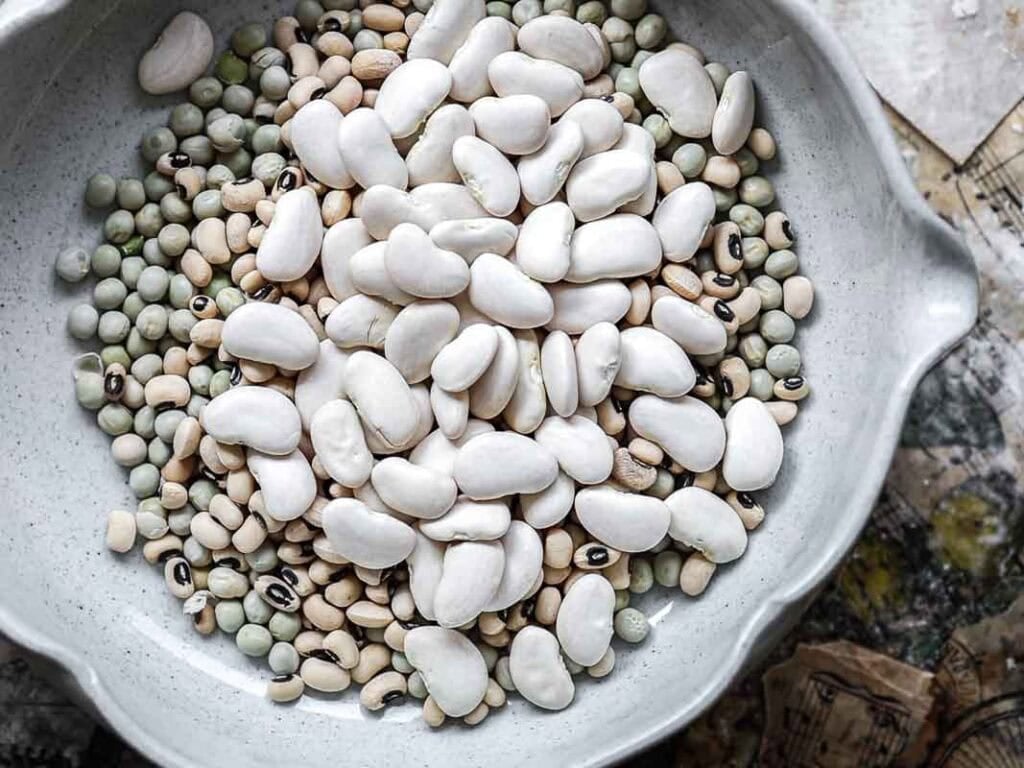
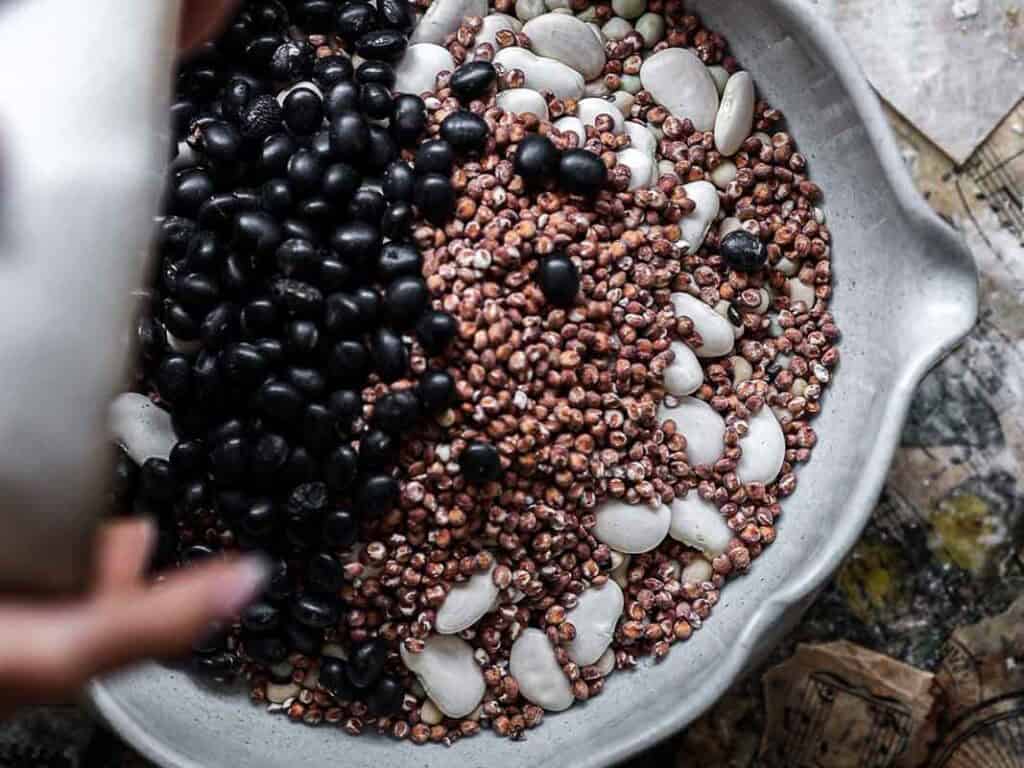
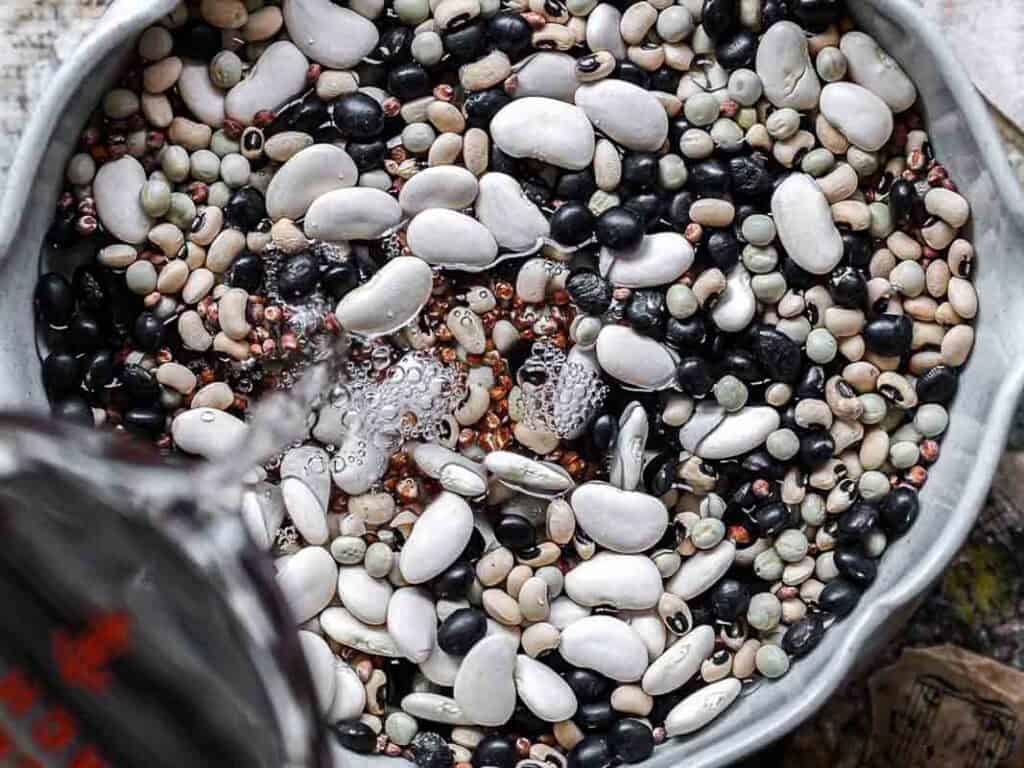
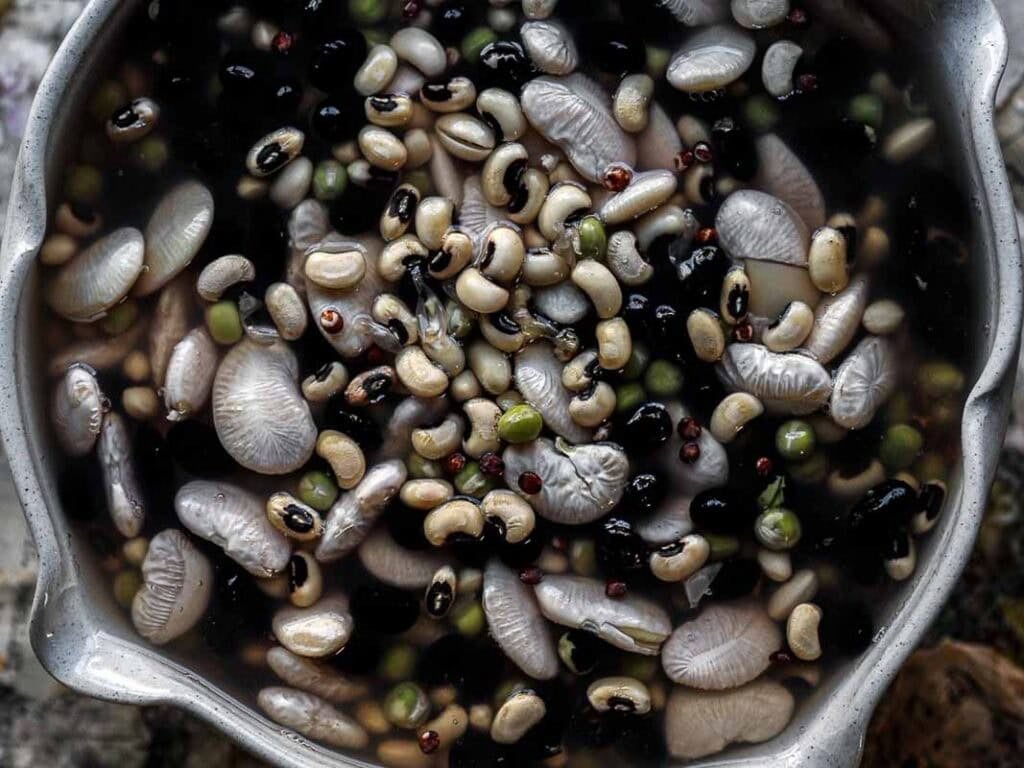
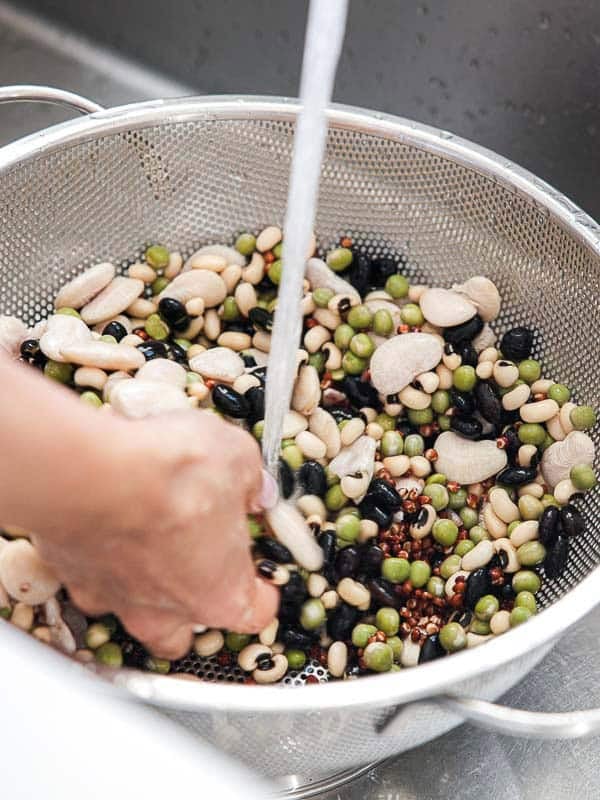
Your beans will take longer to cook than any other part of your Korean multigrain rice. Therefore, you will need to soak them for longer than you do your grains. The only exception is sorghum, which requires a longer soak than your other grains. You can, however, soak your legumes altogether. Simply pour your peas, lima beans, soybeans, black eyed peas, and sorghum into a large bowl. Pour enough filtered water over them so they are not just completely submerged, but have a couple inches of extra water. Place these in the refrigerator for at least 24 hours.
Step 2: Soak your grains.
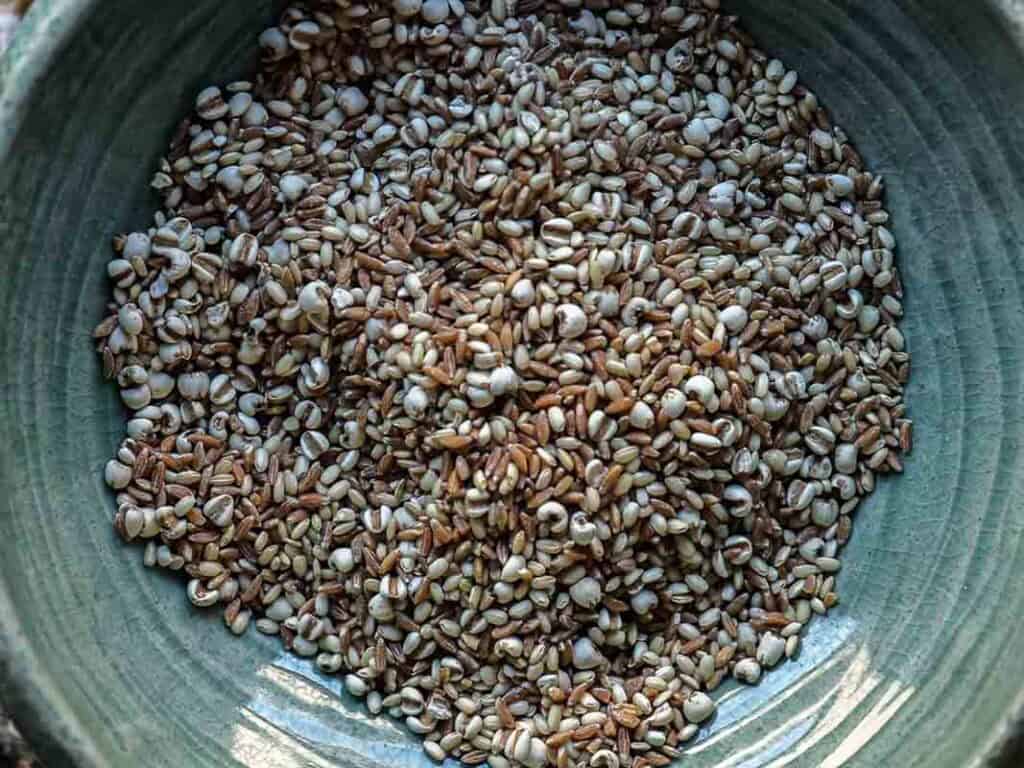
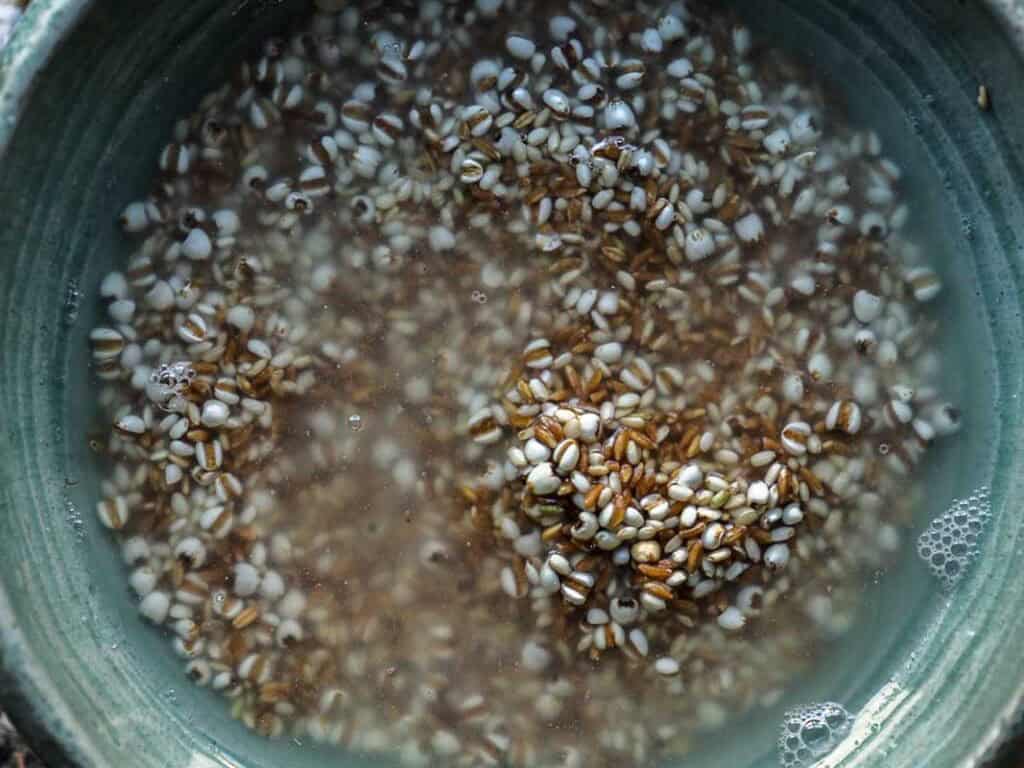
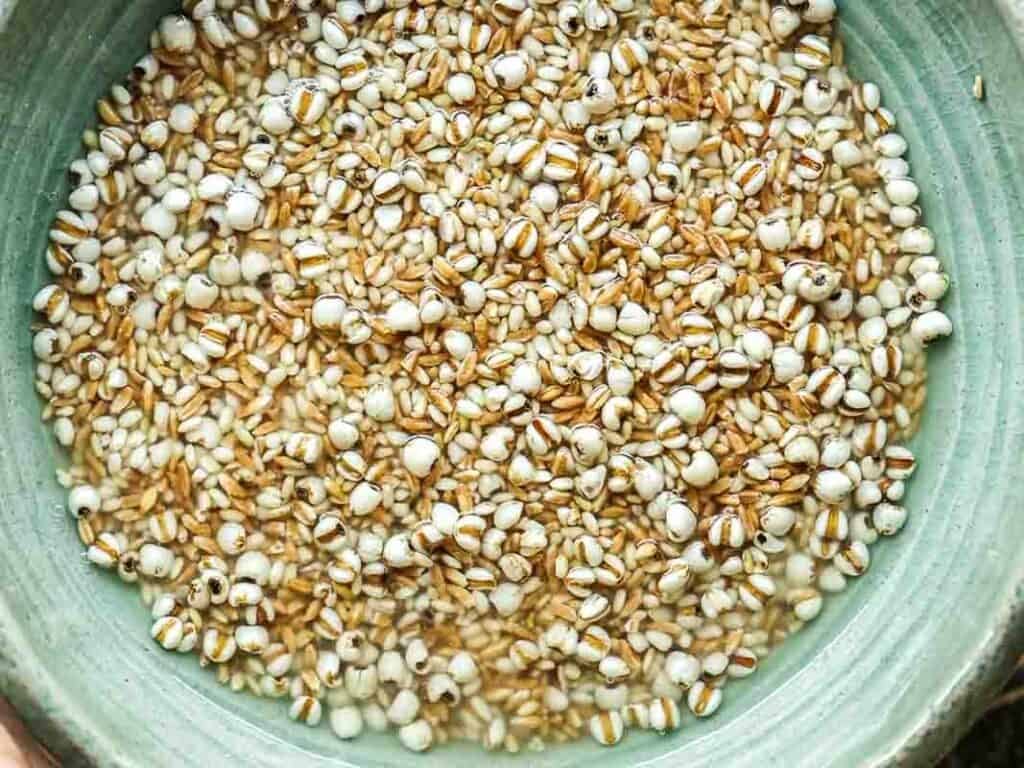
Pour your sweet brown rice, brown rice, farro, and barley into a separate large bowl. Add filtered water until the grains are entirely submerged with another inch of extra water. Soak for at least 1 hour.
Step 3: Drain, rinse, and dry.
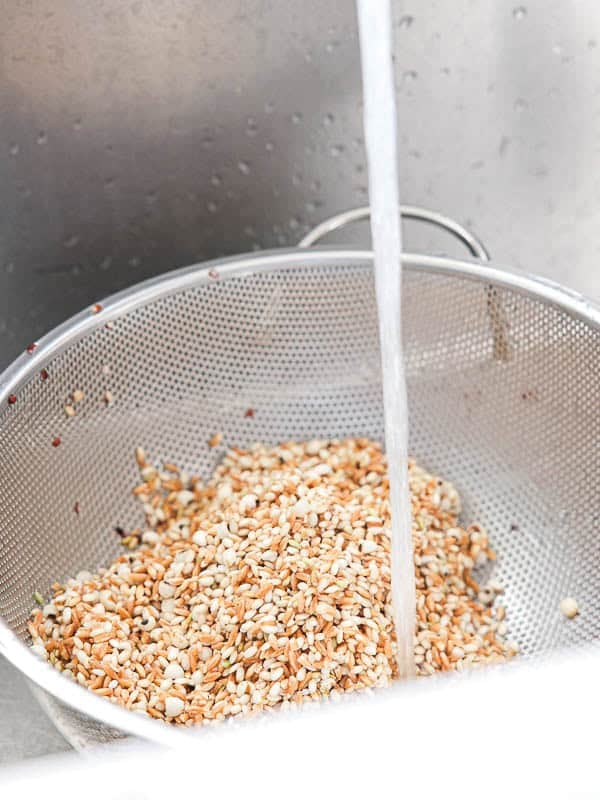
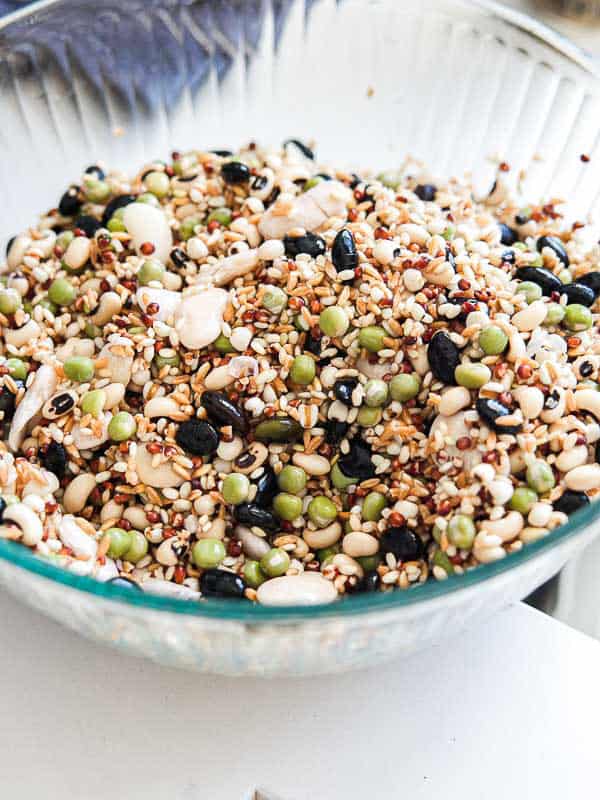
Drain and rinse all your soaked ingredients–both the legumes and the grains–multiple times. The legumes, in particular, contain lectins which can cause digestive distress. These are released when the beans are soaked so you want to thoroughly rinse your beans. Afterwards, pat them all dry with a kitchen towel and place them in an airtight container for up to 5 days before cooking. You can also freeze your Korean multigrain rice blend and thaw before cooking.
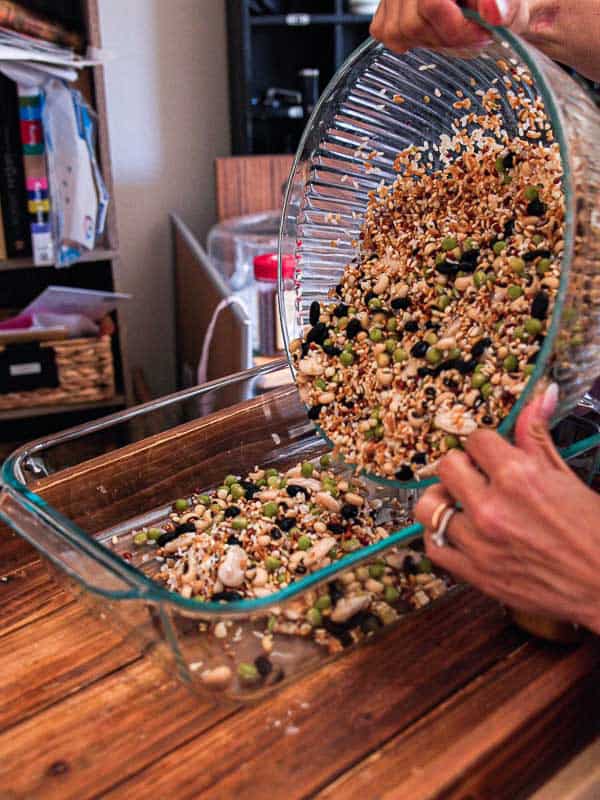
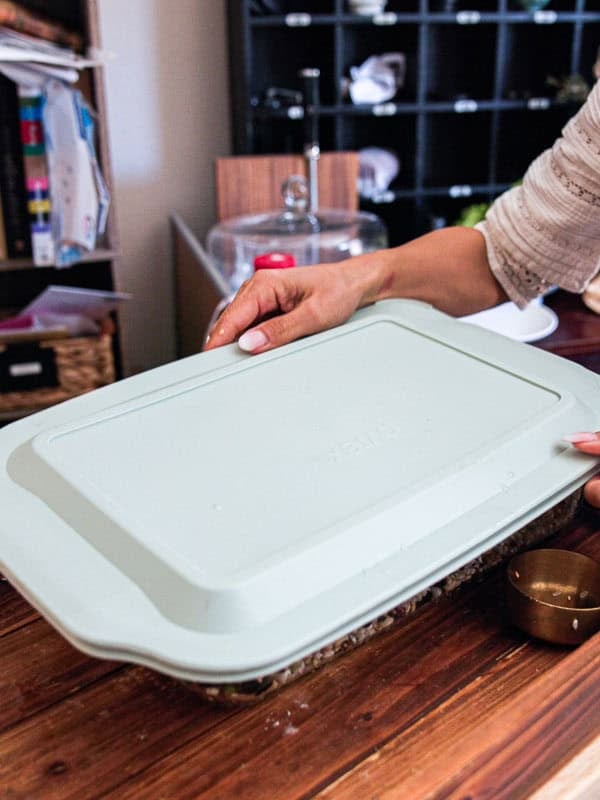
Step 4. Cook your rice.
To cook your Korean multigrain rice, measure out 1.5 cups of rice mix and add 2 cups of water. Yes, you will need far less water than usual because you’ve already soaked your grains. Place in your rice cooker with a little sea salt and cook on “mixed rice” or “brown rice” mode.
Frequently asked questions.
Is Korean multigrain rice gluten-free?
Believe it or not, no. At least, not this version. Both pearled barley and farro contain gluten and therefore, Korean multigrain rice is often not gluten-free. To make Korean multigrain rice gluten-free, simply substitute the farro and barley with gluten-free grains, like millet or quinoa.
Why does the Korean multigrain rice blend need to be refrigerated or frozen?
You will need to refrigerate or freeze your Korean multigrain rice blend because the ingredients, once soaked, can be subject to fermentation or grow rancid.
Recipe Card.
Korean Multigrain Rice.
Ingredients
- 1/2 cup dried green peas
- 1/2 cup dried lima beans
- 1/2 cup dried black soybeans
- 1/2 cup dried black eyed peas
- 1/2 cup uncooked sorghum
- 1 cup uncooked short grain sweet brown rice
- 1 cup uncooked short grain brown rice
- 1 cup uncooked farro
- 1/2 cup uncooked pearled barley
- salt
Instructions
- Soak peas, Lima beans, soybean, black eyed peas, and sorghum in filtered water overnight.
- Soak sweet brown rice, brown rice, farro, and barley in filtered water for 1 hour.
- Drain and rinse all ingredients multiple times. Dry with kitchen towel and place in airtight storage container. Keep in the fridge for up to 5 days, then transfer to freezer.
- To cook, measure out 1.5 cups of rice mix and add 2 cups of water. Place in rice cooker with sea salt and cook on “mixed rice” mode. You can also use a pressure cooker. You can also cook in a regular pot but your beans will still be pretty chewy.


This recipe sounds awesome. Is there anything we another grain or ingredient you’d recommend to substitute for the barley so it can be gluten-free?
Hi Deanna, That’s a great question! To make Korean multigrain rice gluten-free, simply substitute the farro and barley with gluten-free grains like millet or quinoa. I hope you enjoy the japgokbap!
If the beans need to be soaked for 24 hours and the grains for an hour, why is it that stores like H-Mart sell so many ready made mixtures of rice, grains and beans which can’t be separately soaked? And can you cook those mixtures in a non pressure rice cooker?
I have a very old simple rice cooker that only has one setting, on. Do you think it would be possible to make this in my rice cooker if i just keep turning it on once it turns itself off over and over until i reach a certain time?
I found that in that kind of rice cooker the beans (or at least some of them, the larger ones) will come out hard and chewy that way with uncooked centers, but they will come out much better if you soak them in the pot overnight first. If you go to H Mart, you can find some mixtures with a less number of and smaller beans that will work better.
I have a brand new instant pot id like to try this recipe with! If you know, how would one cook it in an instant pot? Thank youxx
My rice cooker does not have a “mixed rice” mode. What time do you suggest instead? Thanks!
Hi Gloria! I would use the “brown rice” option, which takes about an hour. Hope that helps!
Gosh, I LOVE this most nutritional side! Reminds me of a lovely risotto loaded with fiber and extra textures. I soaked ingredients for step 1 for 12 hours. End result was creamy with plenty of texture. I divided and placed into freezer. Done with my second ‘freezer’ divi . Pleased I still have more to take outta freezer. Phenomenal side for sure!!
Freezing the leftover rice is an excellent choice, Ida, and somehow it tastes even better the next time you eat it, isn’t it? Thanks for enjoying the recipe!
Hi Joanne, I can’t have gluten, what do you recommend to replace the farro and barley?
Hi Sheila! I cover this in the FAQ section, but I would sub in millet and/or quinoa! 🙂
This looks and sounds AWESOME! As a new, proud owner of a fancy rice cooker, I want to try this. QUESTION: It looks like this could be enjoyed on its own, but if you wanted to serve it with something, any suggestions as an accompanying dish?
Hi Brandon! I’m so glad you asked this because I want to manage your expectations–this is not going to taste like fried rice or even rice pilaf or rice and beans. There is no added fat and only a pinch of salt. That’s because it’s designed to be eaten with Korea side dishes! 🙂 The BEST is kimchi of course. I also made this with a little Korean kimchi salad (which is basically spring greens with a little sesame oil and bibimbap sauce) and it was fantastic. Another GREAT option would be to have this with soup like Seaweed Soup or Kimchi Jjigae. Think bold flavors, particularly those that are a bit on the acidic side (like pickles) in order to pair with the heartiness of the grains and legumes. If you’re looking for a protein, my fave would be braised tofu. A lot of these recipes I’m rattling off are in my cookbooks so hopefully you have those. Otherwise, browse through my Korean recipes to see what looks appetizing! I hope that helps!!